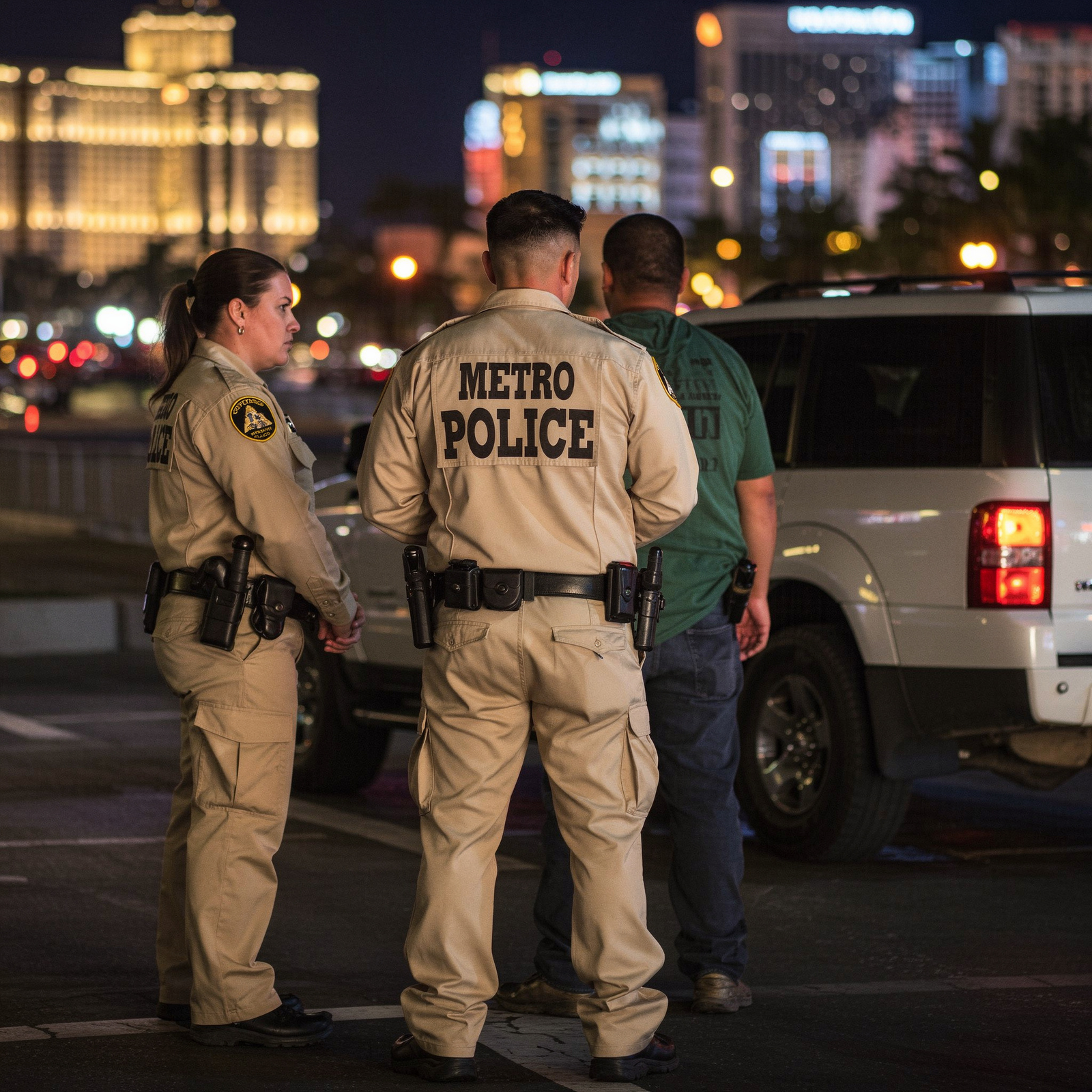
A domestic violence arrest in Las Vegas can happen quickly after police respond to a dispute between family members, partners, or people in certain relationships.
Sometimes officers arrive after a 911 call. In other cases, a neighbor or another person may contact law enforcement.
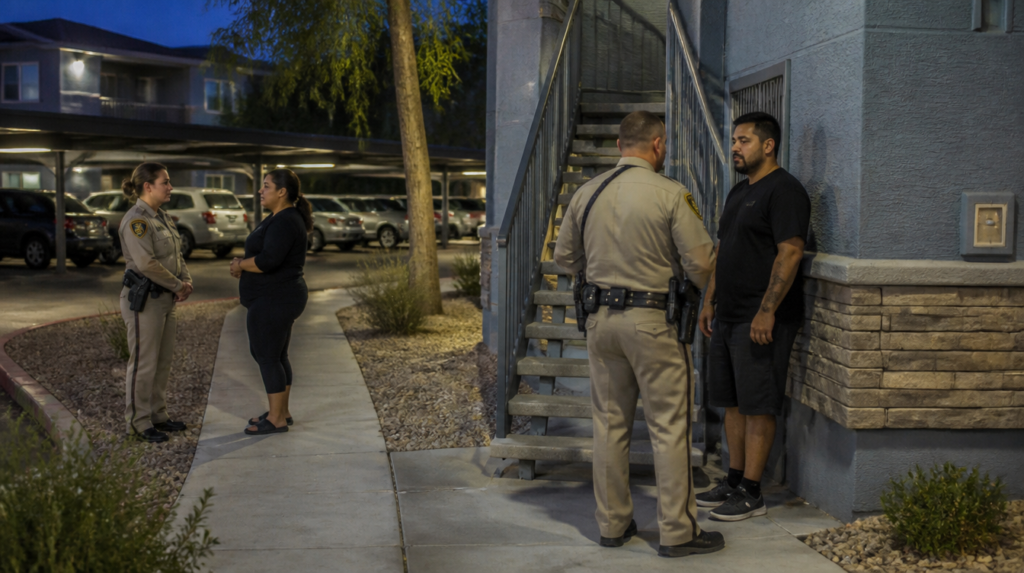
Once police arrive, they may separate the people involved, ask questions, examine injuries, and collect other evidence.
However, an arrest does not mean someone has been convicted. A criminal case still must move through the legal process.
What Can Lead to a Domestic Violence Arrest in Las Vegas?
Nevada law does not treat domestic violence as one single criminal offense.
Instead, certain underlying acts may receive a domestic violence designation when they involve specific relationships.
Battery is one common example. However, other alleged conduct may also fall within Nevada’s domestic violence laws.
The relationship between the people involved therefore matters.
Spouses, former spouses, relatives, dating partners, people who share children, and certain other relationships may fall within the law.
Because every situation differs, the specific allegations and relationship can affect how the case proceeds.
What Happens During a Domestic Violence Investigation?
When officers respond to a domestic dispute, they may speak with everyone involved.
They may also interview witnesses and look for physical evidence.
For example, officers might photograph injuries or property damage. Additionally, body-worn camera footage may document statements and conditions at the scene.
Text messages, phone records, surveillance footage, or photographs may later become relevant.
Officers may also consider whether anyone requires medical attention.
Ultimately, law enforcement may decide whether probable cause exists for an arrest.
What Happens After a Domestic Violence Arrest in Las Vegas?
After a domestic violence arrest in Las Vegas, the accused person may be booked into custody.
The case can then begin moving through the criminal court system.
Depending on the circumstances, release conditions may become an immediate concern.
A court may impose restrictions concerning contact with another person. Additionally, orders or conditions may affect where someone can go while the case remains pending.
These restrictions can create practical problems when people share a home, children, belongings, or finances.
Therefore, defendants should carefully understand and follow every court order or release condition.

Can the Alleged Victim Drop the Charges?
This is one of the most common questions surrounding domestic violence cases.
An alleged victim may tell prosecutors that they no longer want the case to continue. However, that request does not automatically end the criminal case.
The government prosecutes criminal charges.
Therefore, prosecutors generally decide whether to continue pursuing the case.
They may consider statements, photographs, recordings, witness accounts, police observations, and other available evidence.
As a result, a case can sometimes continue even when the people involved have reconciled.
What if the Story Changes After the Arrest?
Domestic disputes can involve stressful and confusing circumstances.
Statements made during the initial police response may later become disputed. Witnesses may also remember events differently after emotions settle.
However, changing a statement does not automatically erase the original evidence.
Police body-camera recordings, 911 calls, photographs, text messages, and witness statements may preserve information from the incident.
Likewise, prosecutors may compare later statements with earlier ones.
For that reason, reviewing the entire body of evidence can become important when preparing a defense.
Evidence Matters in a Las Vegas Domestic Violence Case
A police report provides one account of an alleged incident. However, it may not contain every relevant detail.
Other evidence may provide additional context.
For example, surveillance footage could capture events before or after the alleged confrontation. Text messages might show communications between the parties.
Witnesses may also have information that officers did not initially receive.
Additionally, photographs can sometimes document injuries, property conditions, or other circumstances.
Preserving available evidence early may become especially important because recordings can disappear and memories can fade.
Does Every Domestic Violence Case Go to Trial?
No. Many criminal cases resolve before reaching trial.
Attorneys may review evidence, raise legal issues, and communicate with prosecutors as the case proceeds.
Depending on the circumstances, negotiations may result in a particular resolution.
Other cases may ultimately be dismissed.
However, some domestic violence cases do proceed toward trial.
When that happens, the prosecution must prove the required elements of the charged offense. The defense can challenge evidence, question witnesses, and present applicable defenses.
The appropriate strategy depends on the specific facts of the case.
Can a Domestic Violence Charge Affect More Than the Court Case?
A domestic violence case can create consequences outside the immediate criminal proceedings.
Court orders may affect contact between people. Additionally, criminal convictions can create longer-term consequences.
Depending on the circumstances, issues involving employment, professional licensing, housing, firearm rights, or background checks may arise.
The case can also overlap with family law matters when the parties share children.
Therefore, defendants should consider both the immediate allegations and the possible long-term effects when evaluating their options.
What Happens if Domestic Violence Charges Are Dismissed?
A dismissal ends the prosecution of the dismissed charge, but records connected with the case may still exist.
Court databases and criminal history systems may continue showing information about the arrest or case.
Nevada provides a legal process for sealing eligible criminal records.
Dismissed charges can qualify for record sealing without the waiting periods that apply to many convictions, although other requirements still apply. We offer a fully remote Nevada criminal record sealing service.
Consequently, someone whose case was dismissed may later decide to address the remaining public record.
What to Remember After a Domestic Violence Arrest in Las Vegas
A domestic violence arrest in Las Vegas can create immediate legal and personal complications.
However, the arrest itself does not determine the outcome.
Evidence, witness statements, recordings, the underlying allegations, and the relationship between the parties can all affect the case.
Defendants should also pay close attention to court dates and release conditions.
Violating a court order can create additional problems even while the original charge remains unresolved.
Understanding the process can help someone make informed decisions as the case moves forward.
Facing a Domestic Violence Charge in Las Vegas?
Domestic violence allegations can affect someone’s home, relationships, employment, and future.
Justice Law Center represents clients facing domestic violence and other criminal charges in Las Vegas. Our attorneys can review the allegations, examine available evidence, and explain possible legal options.
Contact Justice Law Center for a free consultation to discuss your case.